
Most first trips to a Kentucky bank go wrong in small, predictable ways: a missing license, a tangle at the first cast, a hook in a thumb, a child who is hot and hungry by minute forty. This Kentucky bank fishing gear checklist is grouped by the moment each of those problems shows up, and every item says what it prevents. Tick the boxes in the driveway, and you will know why each thing is in the bag.
It assumes a family fishing from the shore with ordinary spinning rods and live or store-bought bait. If you want the shorter ranked version, the family gear that actually matters at Kentucky lakes covers what to skip.
Check These Before You Leave the Driveway (License, Rods, Bait, Water)
These four items decide whether the trip happens at all. Checking them at home is much easier than discovering a gap at the lake, where there may be no cell signal and no store nearby.
- Fishing licenses sorted. This prevents a ruined trip or a fine. Rules on who needs a license, and at what age, are set by the Kentucky Department of Fish and Wildlife Resources and can change, so check their current requirements for every person in your group before you go. Keep the licenses where you can find them, such as on a phone with the screenshot saved for offline use.
- Every rod strung and the reel working. This prevents standing on the bank untangling line while the kids wait. Reel a few turns and make sure the line runs through every guide (the small rings along the rod).
- Bait is alive, fresh, or in the bag. This prevents a quick drive back to town. If you use worms or minnows, check the container before you load the car. Keep live bait out of a hot trunk.
- Water, enough for everyone. This prevents the earliest meltdown of the day. Bring more than you think you will drink, because kids sweat and fidget in the sun.
- Phone charged, and the lake’s name and parking area noted. This prevents confusion if someone needs to find you, and it lets you look up the bank access point before you lose signal.
If you keep your gear in one place between trips, this part gets faster. The piece on how to store fishing gear between Kentucky trips shows how to leave everything trip-ready.
Gear for Getting to the Bank: Footwear, Seating, and Carrying Light
Many Kentucky lake banks involve a walk down a slope, over rocks, or through mud near the waterline. The way you carry things and what you wear on your feet affect the whole afternoon.
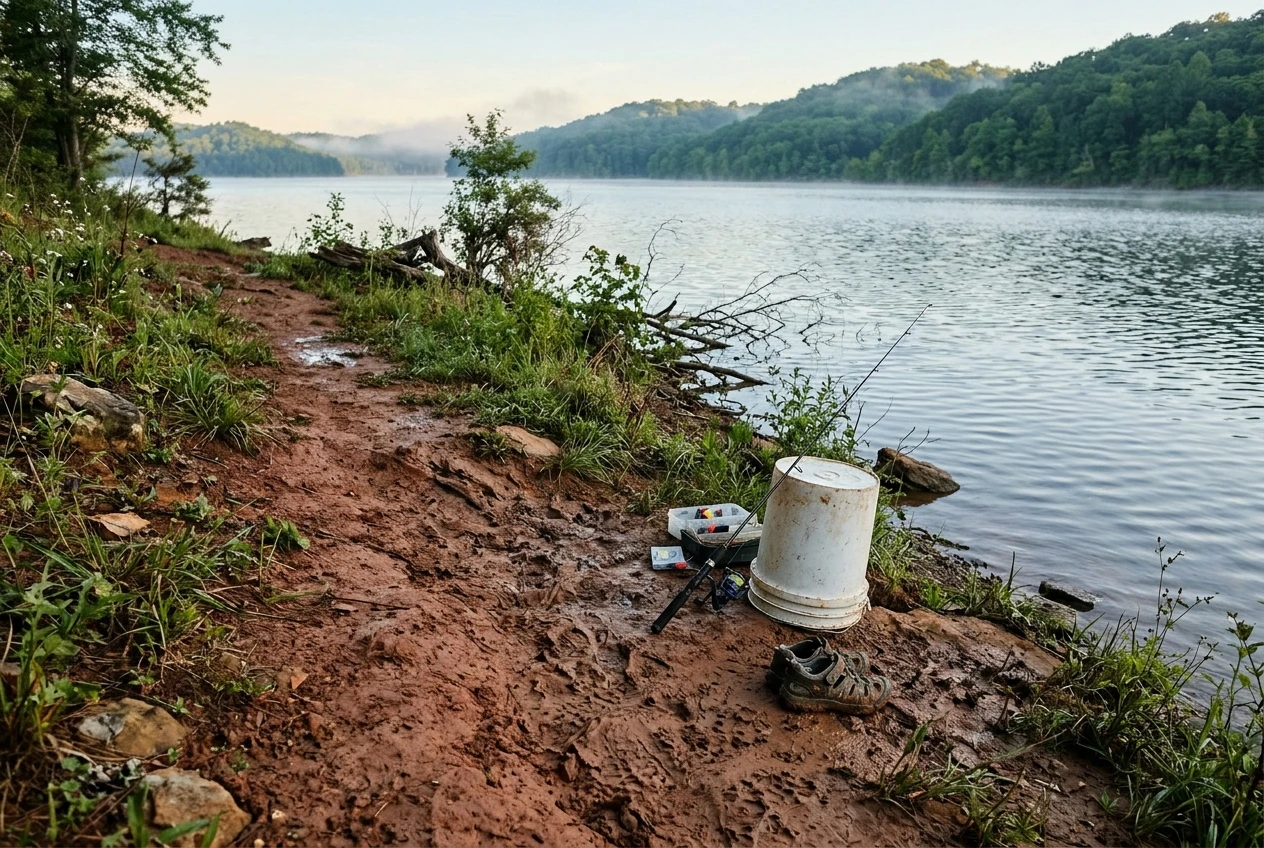
- Closed-toe shoes with a grip for every person. This prevents slips on wet rock and clay and stubbed toes in the shallows. Sandals are the usual mistake.
- A bucket or small folding stool per adult, and a spot for the kids to sit. This prevents the aching back and the restless child. A five-gallon bucket can carry gear on the way in and become a seat once you are set up.
- One backpack or tote you can carry with one hand. This prevents multiple trips and dropped items on a slope. Keep your hands free for a child’s hand and a rod.
- Rods carried tip-first behind you, hooks secured. This prevents snagged tree branches and snagged people. Hook the hook onto a rod guide or the reel’s keeper ring while you walk.
- A towel or old rag. This prevents slimy hands on the car seat afterward, and it dries a seat before anyone sits down.
A simple way to pack is to build one compact kit and stick with it. The grab-and-go tackle kit article walks through that approach.
The Setup Pieces That Keep the First Hour From Falling Apart
Most of the frustration in the first hour comes from small parts that are either missing or the wrong size. This group is cheap and small, and it is what you will reach for most.
- Bobbers (floats) in a couple of sizes. A bobber shows you when a fish bites, so a child can watch it instead of guessing. A very small bobber is hard for little eyes to follow, and a very large one can scare off a small bite.
- Small hooks in a size that suits the fish you are targeting. Hooks that are too large mean small fish cannot take them. If you are not sure, ask at a local bait shop what size they recommend for the lake and season.
- Split shot (small weights). These sink the bait to where fish are. They also keep the rig from drifting into the bank in wind. If you are curious how deep to set the bait, the guide on bobber bait depth explains how to test before moving.
- A few spare bobbers and hooks. This prevents one lost rig from ending the day.
- Line that is fresh, not brittle or kinked. Old line snaps on a modest fish and causes tangles. If it looks curly or faded, replace it.
- A reliable knot you can tie in under a minute. Loose knots are a common reason a hooked fish gets away. The article on the four knots a Kentucky bank angler actually needs shows each one step by step.
Kids’ rods deserve their own look. If you are choosing or replacing a rod and reel, read how to pick a kids fishing combo that survives a Kentucky lake bank.
What to Have in Hand for Snags, Tangles, and Lost Rigs
Every bank has something under the water: rocks, branches, old line, and weeds. A snag or a tangle will happen within the first few trips, so plan for it as routine and not as a disaster.

- Small scissors or line clippers. This prevents chewing on line with your teeth and gives you a clean cut when a tangle cannot be unpicked. Keep a pair in your pocket and not at the bottom of the bag.
- Extra line, or a spare spool. This prevents a long walk back to the car when a rig has to be remade.
- A pre-tied spare rig or two. A hook, a bobber, and split shot already on a length of line let a child get back to fishing in a minute. Keep them wound loosely on a piece of cardboard so they do not snarl.
- A small container for old line and trash. This prevents tangled line from being left on the bank, where it can hurt birds and other animals.
- Patience as a plan. When a snag happens, walk along the bank in the direction of the line and pull gently from a different angle. If it will not come free, cut it and re-tie. Pulling hard on a snag can send a hook flying back toward you.
A repeating tangle usually has a cause. Run through the checks for a bobber rig that keeps tangling before you cast again.
Handling the First Fish: Tools for Hooks, Grip, and Gentle Release
The first fish is the high point of the trip, and it is also when a parent is most likely to fumble. A fish that is wet, wiggling, and hooked deep is hard to handle with bare hands, and a child will be watching your every move.
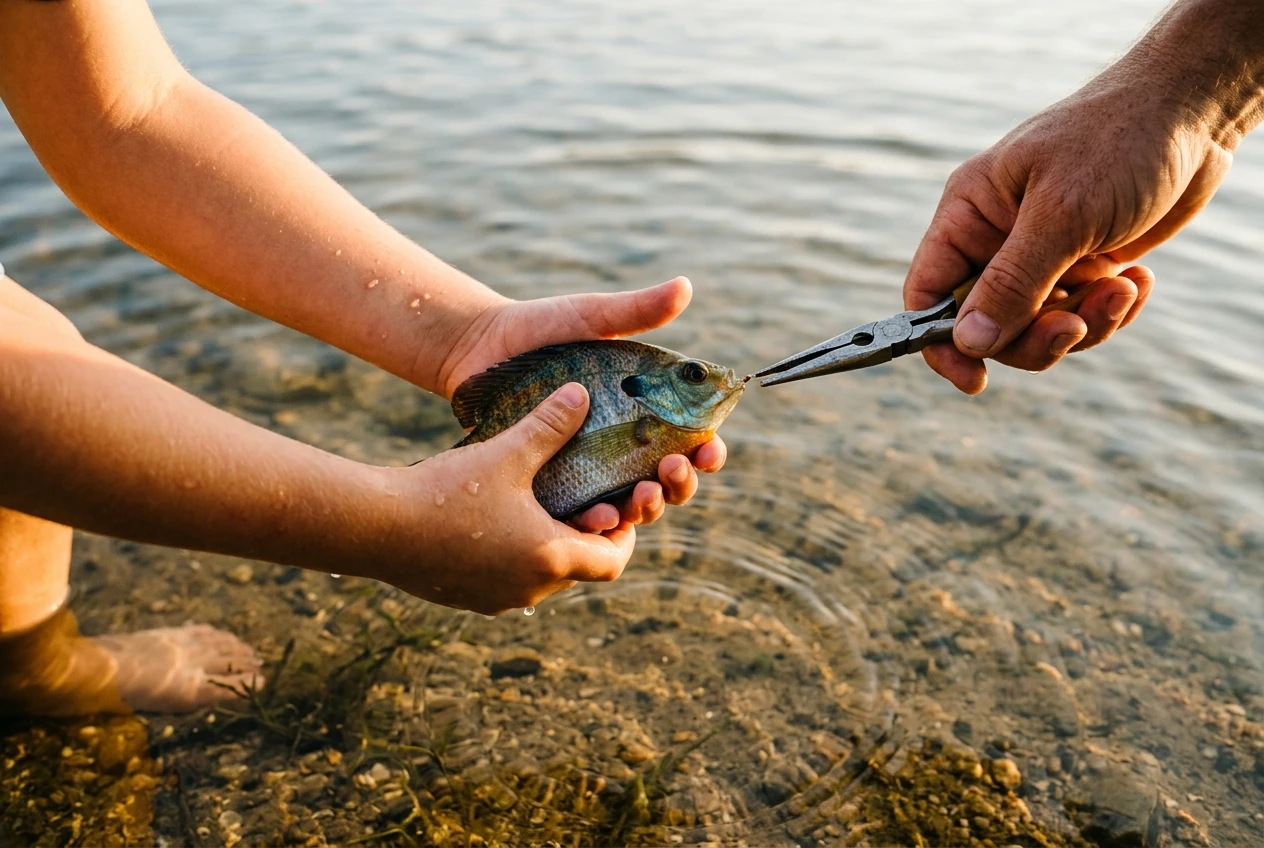
- Needle-nose pliers or a hook remover. This prevents fingers near a hook and lets you back a hook out of the mouth quickly. Keep them clipped to a belt loop or the bag strap.
- A pair of wet hands or a wet rag. Dry hands can strip the protective slime from a fish’s skin. Wet your hands before touching a fish you plan to release.
- Barbless or pinched-barb hooks. You can flatten the barb on most hooks with pliers. A flatter hook comes out more easily from a fish, and from a person or clothing if the worst happens.
- A small first-aid kit with bandages and antiseptic wipes. This prevents a scratched finger or a minor hook prick from becoming a drama. For anything deeper than the surface, seek medical help and do not try to remove the hook yourself.
- A plan for the fish before the photo. Decide ahead of time whether you are keeping or releasing, and check the lake’s size and bag limits through the Kentucky Department of Fish and Wildlife Resources if you plan to keep any. The article on what happens before the photo with a child’s first catch walks through the handling.
Safety gear belongs here too, and it is the item families most often forget. The bank-fishing safety gear families forget piece goes through it in more detail.
Sun, Bugs, Snacks, and Cleanup: The Comfort Items Kids Notice
Kids will tolerate a slow bobber if they are comfortable. They will not tolerate being too hot, bitten, or hungry for long, and neither will most adults.
- Sunscreen, hats, and sunglasses. This prevents sunburn on open banks, where there is often little shade. Polarized sunglasses also help you see into the water.
- Insect repellent. This prevents the swatting and complaining that scares off the kids’ attention. Tall grass near the bank can hide ticks, so check everyone’s legs and hair when you get home.
- Snacks that survive the heat. Think granola bars, fruit, and crackers. Foods that melt or spoil are a poor fit for a bag by the water.
- A light layer, such as a sweatshirt or rain jacket. Weather can change by the hour, and a wet child on a bank gets cold fast.
- A trash bag and a wet wipe or hand sanitizer. This prevents bait smell and fish slime from reaching the car seats. Pack out what you pack in, including bait containers and bits of line.
- A change of clothes for the car. Muddy shoes and wet sleeves are normal on the bank.
Where to Go Next: Rods, Tackle Kits, and Safety Gear Worth a Closer Look
Once you have run through this list a couple of times, you will see which items your family reaches for and which stay in the bag. That is the time to upgrade the pieces that matter most to you.
- Rods and reels are the biggest purchase for most families. The guide to the best Kentucky bank fishing rods for kids and parents covers how to choose them as a pair.
- A single organized kit speeds up every trip. The portable tackle kit article is a good starting point if you have not built one.
- If you are still deciding where to go, the guide to Kentucky bank fishing spots for families goes region by region.
The checklist above fits most Kentucky lakes, but each bank has its own slope, bottom, and crowd. If you want the same level of detail for the exact lake you’re heading to, take a look at our Kentucky lake guide ebooks, which cover where to stand and what to bring for specific bank spots.